From Data
to Design
Using methods of contextual research to rethink the grocery shopping
experience to better meet user needs and exceed their expectations.
Studying at SCAD brought me this valuable course of "Methods of Contextual Research" which greatly influenced my approach to design. This course allowed me to practice techniques-such as interviews, focus groups, contextual inquiry, surveys and questionnaires and the creation of novel research methods-necessary to conduct relevant and useful research. As an online course it also was important practice on working with distributed team members. Conducting research, collaborating, and communicating effectively in a virtual environment were key skills developed throughout the course.
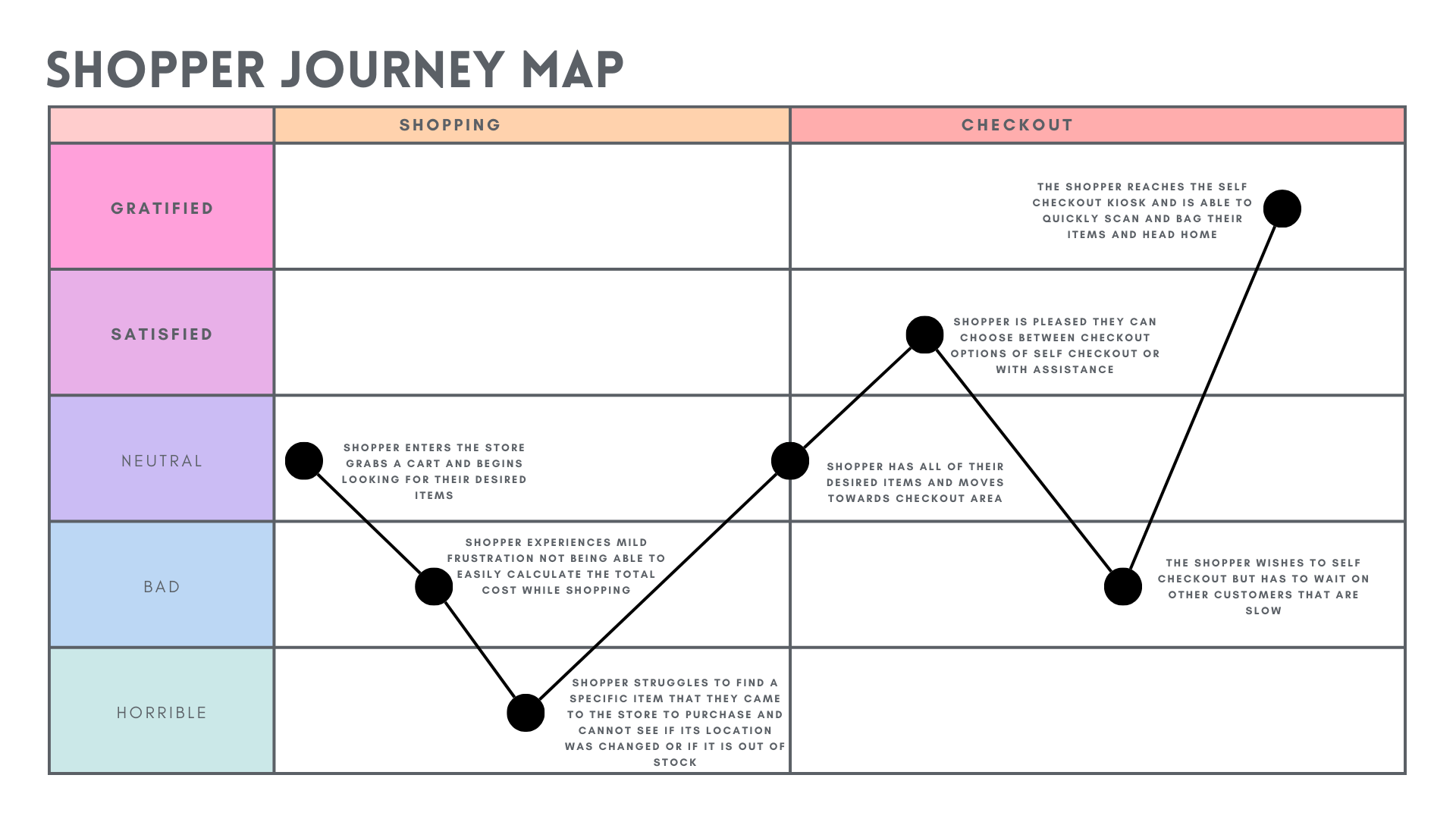
We chose to tackle an experience that nearly every person has almost once a week, grocery shopping. And while the grocery shopping experience is nearly universal, we found that it was not the same everywhere you went. For an activity that billions of people participate in, one might assume that it had already been perfected, however this was not the case. We conducted initial primary research followed by a user survey to get an understanding of user expectations in their shopping experience. We then developed a user journey map in order to map out where the experience was lacking and what we could work towards improving.
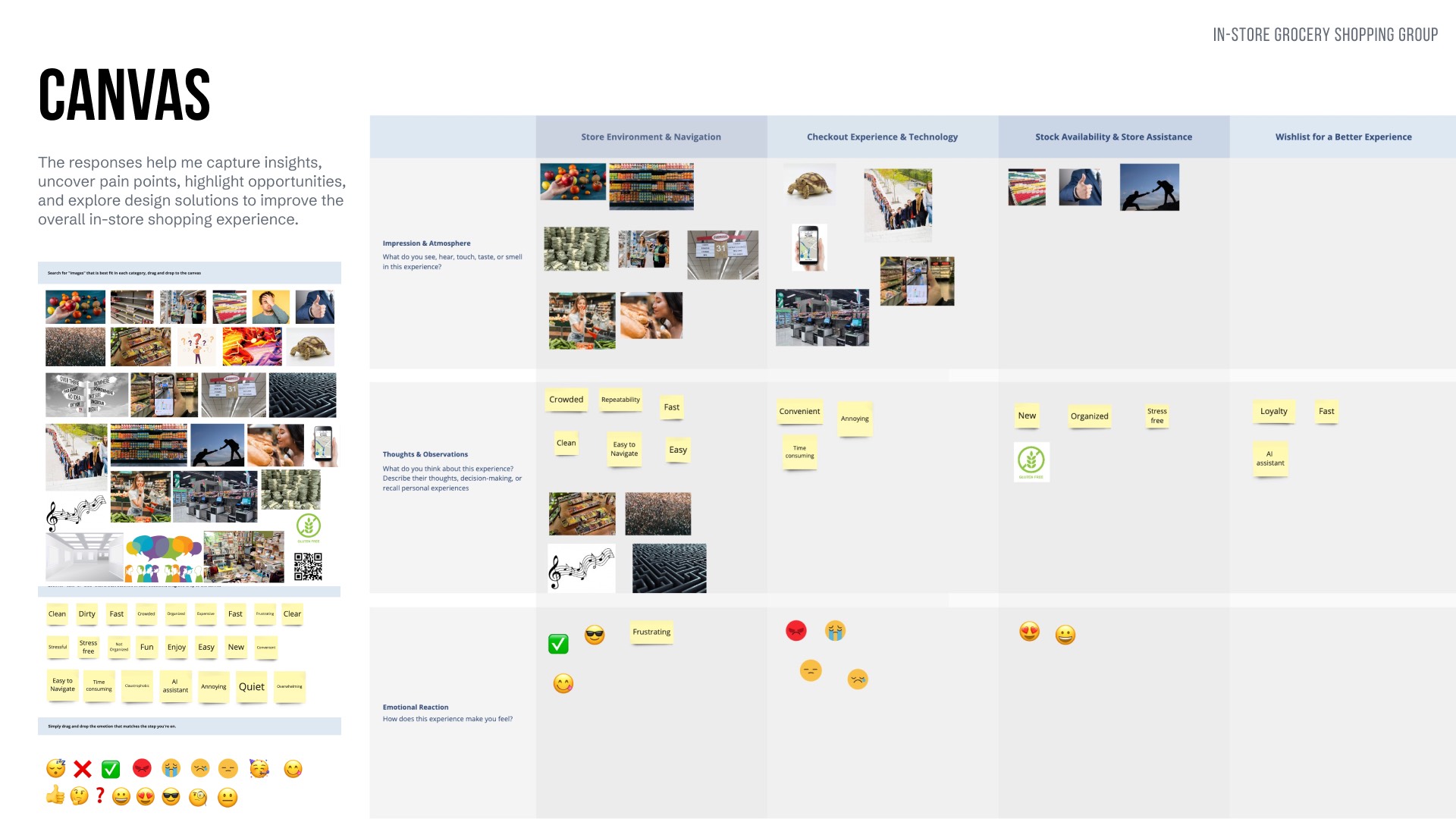
To supplement the quantitative data we got from our research and survey, we wanted to also get deeper insight into what shoppers were experiencing on a sensory level during their grocery shopping trips. This involved exercises and observations focused on sensory cues and how they influenced the overall shopping experience. We conducted one on one calls with users allowing them to go through the sensory cues map we developed.
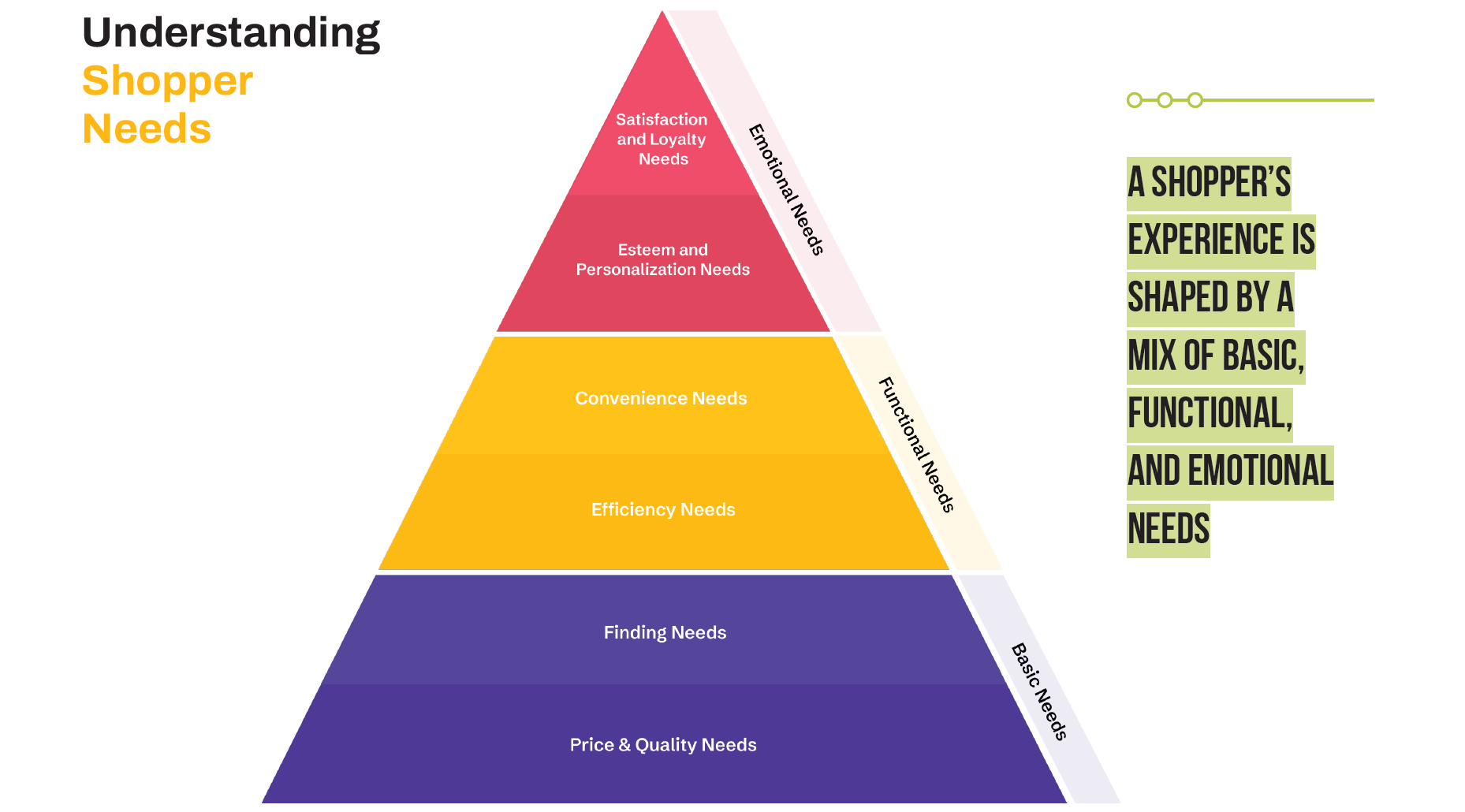
We developed a framework in order to better organize the priorities of shoppers when it comes to their needs and expectations during the shopping experience. Inspired by Maslow's hierarchy of needs, we developed the Shopper's hierarchy of needs. Starting of course with basic needs as the base liek price, quality, findability. Moving upwards towards functional needs like convenience and efficiency. At the top, highlighting what creates a truly great shopping experience are the emotional needs, like personalization, satisfaction, and loyalty rewards.
If you are interested in seeing the full magazine we developed, you can view it below!